
Project Title: MagnusFX
Skills: C#, Unity 3D
What is your project about?
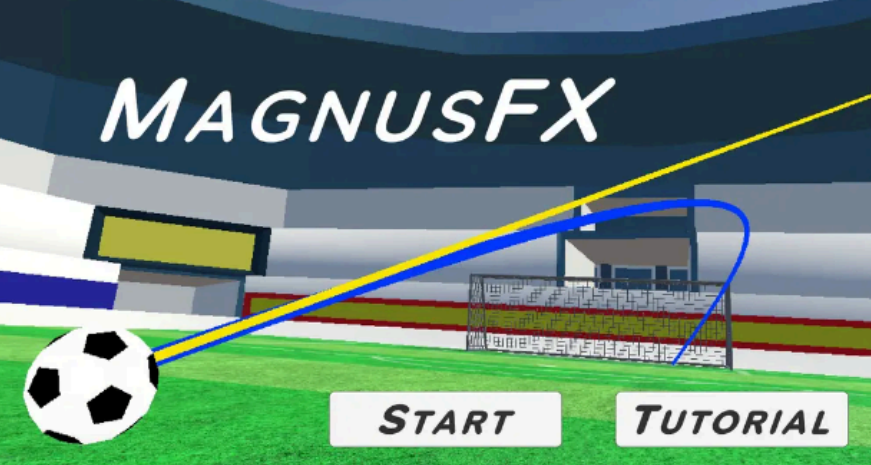
Our project is a physics simulation/game of the Magnus effect, a phenomenon in which a ball’s rotation affects its trajectory (see Roberto Carlo’s famous example here).
What are the core aspects of your project?
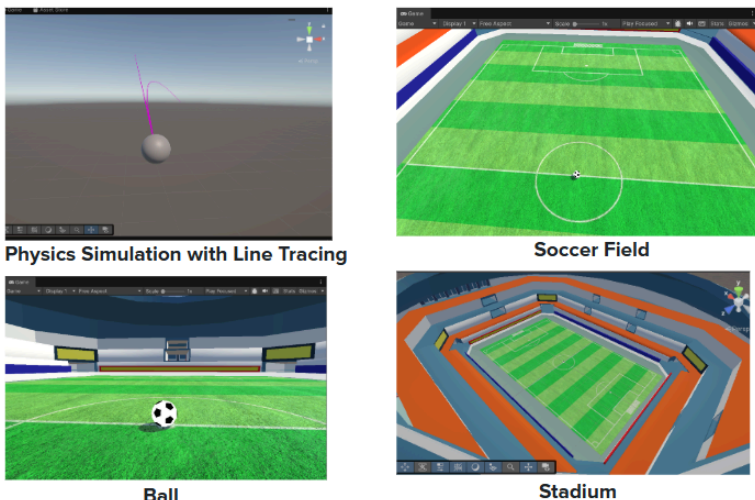
The core aspects of our project include a physics simulation system
that models the Magnus effect, an interactive gameplay environment where users can adjust various variables on a moving ball, and a user-friendly interface that makes experimentation simple and engaging. Additionally, the project emphasizes real-time feedback, allowing players to immediately see how their inputs affect the ball’s trajectory.
What are the goals/vision for this project?
- The goal of this project was to create an educational and engaging game for people to play and learn how variables such as spin, velocity, and direction affect the trajectory of a ball under the Magnus effect.
What does your project do? What was your client hoping to get out of it?
- Our project gives users a fun game they can play to help them understand and interact with the Magnus effect.
- Most of our design choices came from our experiences and brainstorming to help us decide what we thought would be most interesting to the user.
What are the project requirements? How did you address the requirements?
The only constraints we had were that the project had to focus on the Magnus effect and be completed within 6 weeks of starting. We addressed these by meeting regularly to stay on track with the due date and to brainstorm ideas as a group.
Future work. If you were to continue this project, what would be the next steps?
Our next step would definitely be to add more levels since that was one of the few pieces of feedback we got on how the project could be improved. Other than that, we would probably just finish incorporating one function that wasn’t fully explored due to time constraints, and then polish the physics, since not all of it is as realistic as it could be.
Show and describe your process to design and develop your project.
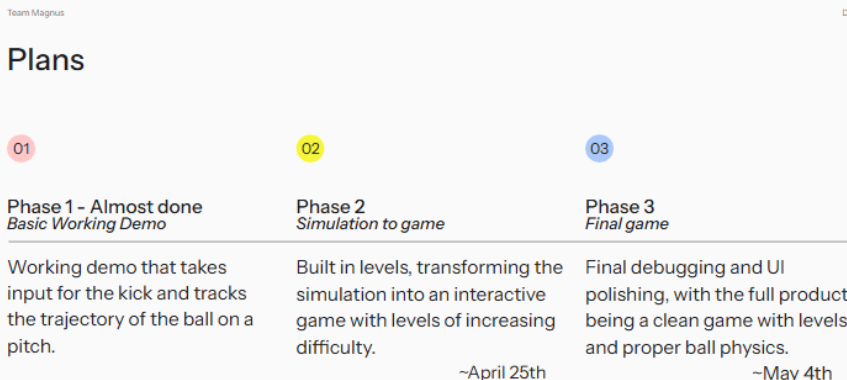
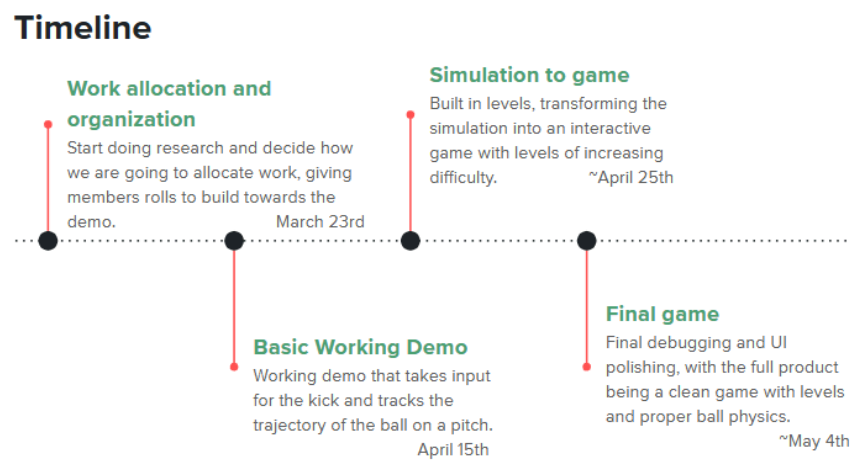
We started by researching the Magnus effect, then planned gameplay ideas. Tasks were divided among group members, and we built the project step by step, testing and improving along the way. Regular meetings helped us stay on track and solve issues.
Talk about your challenges and achievements.
Sometimes, organizing tasks and brainstorming what to do next were challenging due to conflicting ideas about our project’s future. Another challenge was that people sometimes couldn’t work on their part of the project because it depended on another part that a different group member hadn’t finished yet.
(Disclaimer: As computer science students, we approached the physics behind this project to the best of our ability. Users should keep this limitation in mind when interpreting the results.)
Acknowledgments and References
In addition to the paper authors listed below, we would like to thank our peers, Prof. Eliott, the Vivero Fellows, Andrew Kelley ‘14, and Anthony Sherrell ‘26, for their guidance and feedback throughout this project.
Paper: S4_4 Roberto Carlos’ “Impossible” Free Kick. S. M. B. Croxford, J. T. Best and M. J. Duggan, 2017.
Educational Scope: This page documents a student-led prototype developed within the CSC324 course at Grinnell College. Consistent with our pedagogical philosophy, this project is a research and learning artifact, not a commercial product. The findings and technical implementations reflect the students’ learning process at the time of the project’s conclusion and may contain the limitations typical of experimental academic prototypes.
